


In the vocabulary of premium knitwear, the term finishing (or fabric enhancement) has long evoked images of large treatment tanks, chemical baths, steam, and intensive water and energy consumption. This crucial stage in knitwear production is where raw yarn is transformed, acquiring the handle, softness, shrink resistance, and technical properties—such as water repellency and antibacterial performance—demanded by today’s fashion and luxury markets.
However, in an era defined by the urgent need for a profound ecological transition, conventional finishing processes have become one of the industry’s greatest bottlenecks due to their heavy reliance on water and chemicals. The solution does not lie in simply optimizing the existing paradigm, but in replacing it altogether through advanced plasma physics. Welcome to the era of dry finishing with plasma technology.
What Is Plasma, and How Is It Applied to Yarns and Knitwear?
Often described as the “fourth state of matter,” plasma is a highly energized ionized gas. In advanced textile finishing, manufacturers use low-pressure cold plasma generated inside vacuum chambers, a process that can be applied both to yarn packages and directly to fully knitted garments.
The process is remarkably straightforward yet transformative. Once the knitted structure leaves the flat knitting machines, it is placed inside a vacuum chamber where the air is removed. An inert gas—typically argon or nitrogen—is then introduced and energized by an electric field, creating plasma. The resulting energetic particles interact with the surface of the fibers at the nanometer scale.
Unlike conventional coating technologies, plasma finishing does not deposit a resin layer or chemical film onto the textile surface. Instead, it modifies the surface morphology and chemistry of the fibers themselves, while preserving their intrinsic structural properties, natural softness, and breathability.
Hydrophobicity and Antibacterial Performance: Advanced Functionality for Knitwear
Plasma technology unlocks entirely new possibilities for knitwear, particularly in two areas that have become increasingly important:
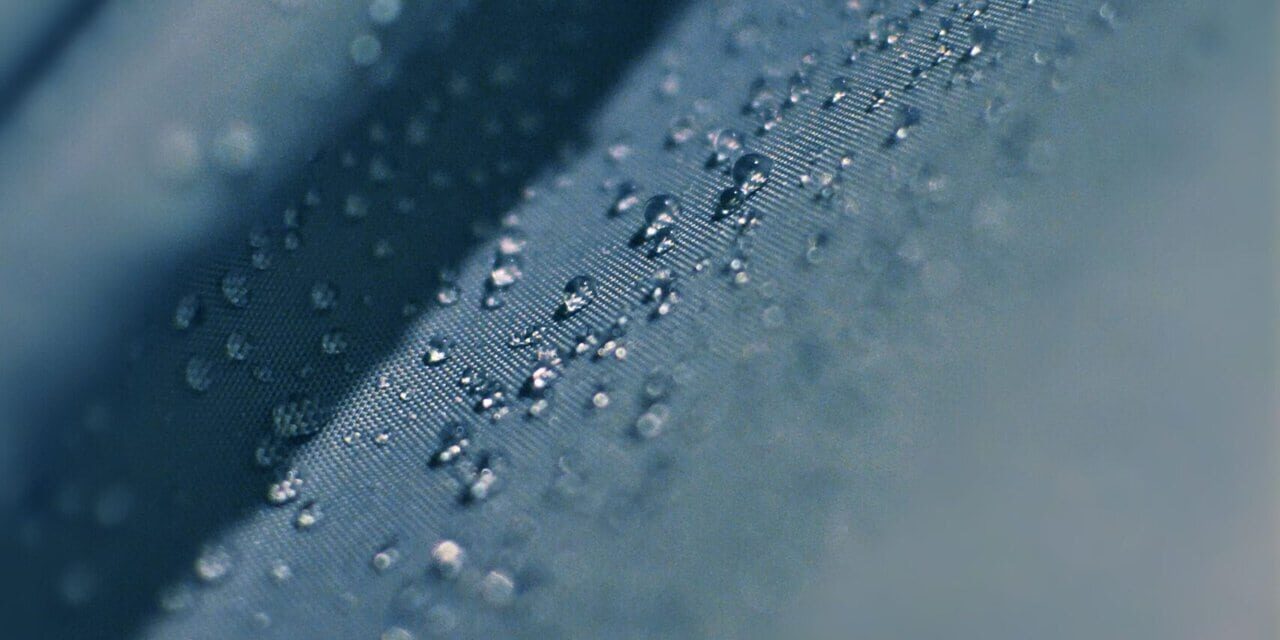
- Permanent Hydrophobicity (Water and Stain Repellency): Traditionally, water-repellent knitwear has relied on perfluorinated chemicals (PFCs), persistent substances that are increasingly subject to global regulatory restrictions. Plasma treatment alters the surface energy of fibers such as Merino wool and cashmere, creating a nanostructure that repels both water- and oil-based liquids. Droplets simply bead up and roll off the knitted fabric without penetrating it, protecting the garment from stains without requiring a single drop of water or environmentally harmful chemicals.
- Permanent Antibacterial and Odor-Control Performance: Plasma technology also enables the grafting of specific functional groups onto the surface of premium yarns, inhibiting the growth of odor-causing bacteria. The result is knitwear that requires significantly less frequent washing, extending the garment’s lifespan while reducing its environmental impact throughout the use phase.
Toward a New Aesthetic of Invisible Performance
Until now, integrating technical and protective functions into knitwear has almost always required compromises, either by altering the purity of natural fibers or by masking their authentic feel with artificial coatings.
Plasma technology fundamentally changes this equation. It demonstrates that the future of knitwear innovation lies not in adding materials, but in optimizing the material itself at the microscopic level. By transforming what is invisible, this clean textile engineering approach enables premium knitwear to evolve into garments that are self-cleaning, water-repellent, and exceptionally durable, while fully preserving the tactile richness and visual authenticity that distinguish the finest Italian knitwear manufacturers worldwide.
Designing the knitwear of tomorrow means embracing this seamless integration of advanced physics and respect for natural fibers, redefining the very concept of sustainable luxury through transparent, efficient, and radically clean manufacturing processes.